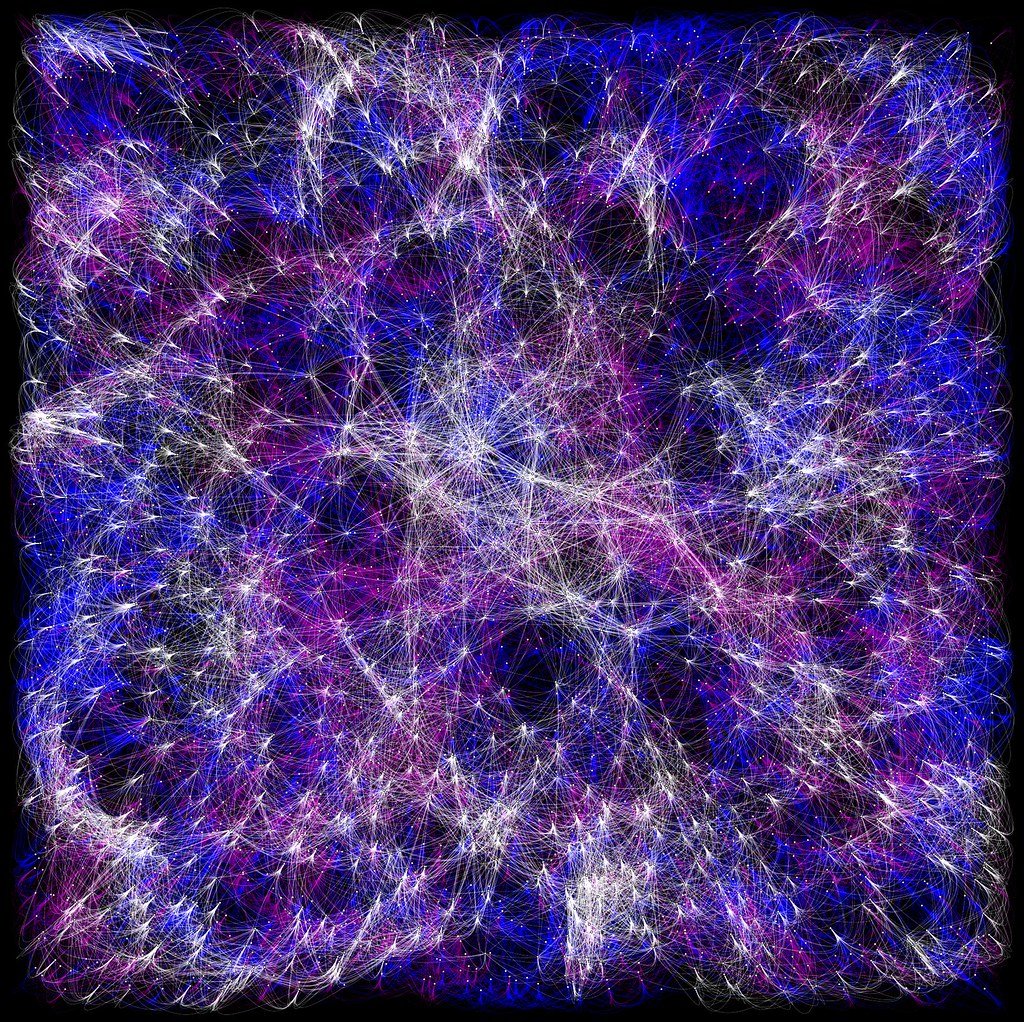
Randomness in mathematics has become a powerful tool as mathematicians harness it to crack a 55-year-old conjecture. This breakthrough showcases the innovative approaches in the field.
Understanding the 55-Year-Old Conjecture
In recent developments, mathematicians have made significant strides in addressing a long-standing conjecture that has puzzled experts for 55 years. This breakthrough highlights the role of randomness in mathematics, showcasing how unexpected approaches can yield substantial insights. The conjecture, which involves complex structures and patterns, had remained unsolved despite numerous attempts by leading mathematicians.
By employing random techniques, researchers were able to explore the problem from a fresh perspective. This method allowed them to generate new data and identify patterns that were previously overlooked. The innovative use of randomness provided a framework for testing hypotheses and refining their understanding of the conjecture.
The findings not only advance mathematical theory but also demonstrate the power of randomness as a tool in problem-solving. As mathematicians continue to refine these techniques, the implications for future research are profound, opening new avenues for exploration in various mathematical fields.
How Randomness is Applied in Mathematics
Randomness in mathematics plays a crucial role in solving complex problems and conjectures. By introducing elements of chance, mathematicians can explore possibilities that deterministic methods might overlook. This approach has been particularly effective in areas such as number theory and combinatorics.
One prominent application of randomness is found in algorithms that utilize random sampling. These algorithms can provide approximate solutions to problems that are otherwise intractable. For example, Monte Carlo methods leverage random sampling to estimate mathematical functions and simulate physical systems.
Moreover, randomness aids in the formation of probabilistic proofs. These proofs demonstrate the existence of certain mathematical structures with high probability, offering insights that can guide further research and exploration. Some mathematicians argue that embracing randomness in mathematics not only enhances problem-solving techniques but also leads to new conjectures and theories.
Overall, the integration of randomness in mathematics showcases its potential to unlock new pathways for understanding and innovation.
Implications of This Breakthrough
The recent breakthrough in utilizing randomness in mathematics has far-reaching implications for both theoretical and applied fields. By successfully applying random techniques to solve a longstanding conjecture, mathematicians have opened new avenues for exploration and discovery. This achievement not only sheds light on complex mathematical structures but also enhances our understanding of randomness itself.
One significant implication is the potential to tackle other unresolved problems, which may have previously seemed insurmountable. The strategies developed through this research could lead to advancements in various domains, including:
- Cryptography: Enhancing security measures through unpredictable algorithms.
- Statistics: Improving models that rely on randomness in data analysis.
- Computer Science: Optimizing algorithms through randomization techniques.
Furthermore, this exploration into randomness in mathematics encourages interdisciplinary collaboration, bridging gaps between mathematics and other scientific areas. As researchers adopt these innovative approaches, the landscape of mathematical inquiry continues to evolve.
Future Directions in Mathematical Research
As mathematicians continue to explore the depths of randomness in mathematics, several future directions are emerging that could revolutionize the field. The recent breakthrough in solving a long-standing conjecture has opened avenues for applying random methods to other unresolved problems.
Researchers are now investigating the following areas:
- Algorithm Development: Enhancing algorithms that utilize randomness could lead to more efficient solutions for complex mathematical problems.
- Interdisciplinary Collaboration: Collaborating with fields like computer science and physics may yield new insights into how randomness can be applied in diverse contexts.
- Statistical Models: Developing better statistical models to analyze random processes can improve our understanding of their behavior in mathematical structures.
By embracing the unpredictability of randomness, mathematicians aim not only to solve existing conjectures but also to reshape how mathematical theories are formulated and tested in the future.
By parameter_bond via Openverse
References
You might also like
Self-Regulation in AI: The Wrong Approach for Progress · Australian startups funding: $275M Raised This Week · Windows Feature Freezes PC: The Worst Problem You Need to Fix