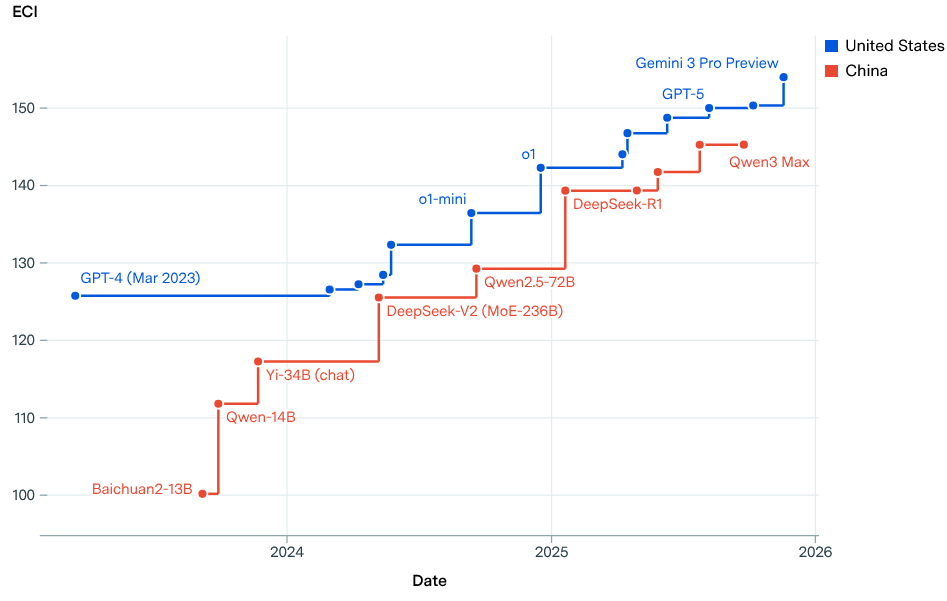
China AI model development is witnessing a remarkable expansion as dozens of companies engage in innovative projects. This trend reflects the country’s commitment to advancing artificial intelligence technology.
Overview of China’s AI landscape
China’s AI landscape has experienced significant transformation in recent years, with numerous companies venturing into AI model development. This rapid growth is driven by substantial investments, government support, and a burgeoning talent pool.
Several key factors contribute to this dynamic environment:
- Government Initiatives: The Chinese government has launched various policies to promote AI research and development, aiming to position the country as a global leader in technology.
- Private Sector Engagement: Major tech companies and startups alike are investing in cutting-edge AI models, fostering innovation and competition.
- Collaboration: Partnerships between academic institutions and businesses are becoming increasingly common, enhancing the transfer of knowledge and resources.
- International Interest: Foreign investment in Chinese AI companies has surged, highlighting the global interest in China’s advancements in AI model development.
As a result, the AI ecosystem in China is not only expanding but also diversifying, promising exciting developments in the coming years.
Key players in AI model development
The rapid advancement of China AI model development has seen numerous companies emerge as key players in the field. These organizations are not only enhancing their technological capabilities but are also contributing to the overall growth of the AI ecosystem in the country.
- Tencent – Leveraging its vast data resources, Tencent is focusing on developing AI models for various applications, from gaming to healthcare.
- Alibaba – Known for its e-commerce platform, Alibaba is investing heavily in AI to improve user experience and efficiency in logistics and customer service.
- Baidu – As a leader in search engine technology, Baidu is pushing boundaries in natural language processing and autonomous driving technologies.
- ByteDance – With its popular app TikTok, ByteDance is exploring AI-driven content recommendation systems to enhance user engagement.
These companies, among others, are driving innovation and establishing China as a formidable force in the global AI landscape.
Impact on global AI market
The rapid development of AI models in China is having a significant impact on the global AI market. As Chinese companies advance their capabilities, they are reshaping competitive dynamics worldwide.
Several factors contribute to this shift:
- Increased Investment: Chinese firms are pouring substantial resources into AI research and development, fostering innovation.
- Collaboration: Partnerships among various industries are facilitating knowledge sharing and accelerating advancements in AI technologies.
- Talent Acquisition: The country is attracting top talent from around the world, enhancing its AI model development.
- Government Support: Initiatives by the Chinese government are creating a favorable environment for AI growth.
As a result, the emergence of robust AI models from China is not only enhancing local industries but also influencing global AI strategies. Companies worldwide are now compelled to adapt to this transformative landscape, showcasing the profound implications of China’s AI model development.
Challenges faced by companies
As China’s AI model development continues to advance, companies are encountering several challenges that could hinder their progress. These obstacles often stem from a combination of regulatory, technical, and market-related issues.
- Regulatory Compliance: Many companies struggle to navigate the complex landscape of regulations that govern AI technologies. The rapid pace of change in legislation often leaves firms uncertain about how to align their innovations with legal requirements.
- Data Privacy Concerns: The collection and utilization of data for AI training raise significant privacy issues. Companies must ensure they are compliant with stringent data protection laws, which can limit the availability of necessary datasets.
- Talent Shortage: Despite the growing interest in AI, there remains a scarcity of skilled professionals in the field. This talent gap can stunt innovation and slow down the development of new AI models.
- Market Competition: The fierce competition among local and international players creates pressure on companies to continually invest in cutting-edge technology, which can strain resources.
These challenges highlight the complexities faced by firms involved in China’s AI model development.
Future trends in AI technology
As China’s AI model development continues to evolve, several future trends are emerging that could significantly shape the industry. Companies are increasingly focusing on collaboration, pooling resources and expertise to enhance their AI capabilities. This trend is expected to foster innovation and accelerate the development of more advanced models.
Another key trend is the integration of AI technology into various sectors, including healthcare, finance, and transportation. By leveraging AI, companies aim to improve efficiency and deliver better services to consumers. Moreover, the rise of edge computing is set to enhance real-time data processing, making AI applications more effective.
In addition, there is a growing emphasis on ethical AI practices, with companies striving to develop models that are not only powerful but also responsible. As the regulatory landscape evolves, adherence to these principles will become increasingly crucial.
- Collaboration among companies
- Integration into diverse sectors
- Rise of edge computing
- Focus on ethical AI practices
Government support for AI initiatives
The Chinese government has increasingly recognized the importance of AI model development as a strategic priority. With a robust framework of support, various initiatives have been launched to facilitate growth in the AI sector.
One of the major steps includes:
- Financial Incentives: Substantial funding is allocated to projects aimed at enhancing AI capabilities, allowing companies to innovate without the immediate pressure of financial constraints.
- R&D Support: The government promotes collaboration between academia and industry, encouraging research and development that align with national goals in AI.
- Regulatory Frameworks: Clear guidelines are established to streamline AI model development, ensuring compliance while fostering an environment conducive to rapid technological advancements.
These efforts contribute to a thriving ecosystem, where numerous companies are now engaged in AI model development, positioning China as a leader in the global AI landscape. As a result, the synergy between governmental support and private sector innovation is set to drive significant advancements in AI technology.
Collaboration among tech firms
In recent years, collaboration among tech firms in China has significantly accelerated AI model development. Companies are increasingly recognizing the importance of forming strategic partnerships to share resources, expertise, and data, which enhances innovation and efficiency in their AI projects.
Several key collaborations have emerged, allowing firms to pool their strengths. For instance, major players in the tech industry are joining forces to tackle complex challenges such as natural language processing and machine learning. This collective effort is fostering an environment where smaller companies can also contribute to AI model development, driving growth across the entire sector.
Moreover, these collaborations often lead to the establishment of research labs and joint initiatives that not only advance technological capabilities but also ensure that the developments align with regulatory standards. As a result, the collaborative spirit is vital in shaping a robust AI ecosystem in China, positioning the nation at the forefront of global AI advancements.
Ultimately, the synergy among tech firms is a testament to the shared vision of propelling China’s AI model development to new heights.
Success stories in AI development
China’s AI model development has led to remarkable success stories among various companies, showcasing the country’s rapid advancements in artificial intelligence. These success stories highlight the innovative approaches taken by firms to enhance their AI capabilities and deliver impactful solutions.
- Baidu: The tech giant has made significant strides with its Ernie model, which focuses on natural language processing and has been integrated into various applications, improving efficiency and user experience.
- Tencent: Through its AI Lab, Tencent has developed models that assist in healthcare diagnostics, showcasing the potential of AI in transforming traditional industries.
- Alibaba: With its DAMO Academy, Alibaba has been at the forefront of AI research, producing models that optimize e-commerce processes and enhance customer interactions.
- ByteDance: The parent company of TikTok has leveraged AI model development to refine content recommendation algorithms, significantly enhancing user engagement.
These examples illustrate how China’s AI model development is not only fostering innovation but also positioning the nation as a leader in the global AI landscape.
China AI model development has seen remarkable advancements, with numerous companies investing heavily in research and innovation. As a result, the landscape of technology in China is rapidly evolving, showcasing the impact of China AI model development on various industries.
By Luke Emberson via Openverse